AI Personality Generator: Build Characters That Hold
Anyone can list personality traits. Making an AI actually behave like that person is a different skill — and it’s the one that decides whether your companion feels alive or like a chatbot reading a character sheet. Here’s how to do it properly.
The best personality generator is the app that runs it.
OurDream lets you build a companion’s personality in detail and actually talk to them — no separate tool, no copy-pasting traits between apps. Free tier, two minutes.
Try OurDream AI free →An AI personality generator hands you a set of traits. That’s the easy part. The hard part is that « sarcastic, guarded, secretly kind » means nothing to a language model unless you tell it what those words actually do in a conversation. This guide covers both halves.
Everything here applies whether you’re building a companion, an NPC, a roleplay character, or a voice for a story. The problem is identical, and so is the fix.
What is an AI personality generator?
An AI personality generator is a tool that creates a character’s psychological profile — traits, quirks, motivations, speech patterns — usually from a short prompt or a few choices. You get back something like: « Warm but guarded. Deflects with humour. Terrified of being needed. »
They come in two flavours, and the difference matters:
- Standalone generators. Produce a trait list. You then have to copy it somewhere that can use it.
- Built-in personality tools. Part of a companion app — you define the personality and immediately talk to it, in the same place.
The second is almost always what people actually want. A personality that exists in a text file isn’t a personality; it’s a description. It only becomes real when something behaves that way — and that’s the gap this guide is about closing.
Why trait lists don’t work on their own
Here’s the failure mode everyone hits with an AI personality generator. You generate a great personality: « Cynical, brilliant, hides vulnerability behind wit. » You paste it in. And the AI is… polite. Helpful. Agreeable. Nothing like the character you described.
The reason: adjectives don’t tell a model what to do. « Cynical » is a label. The model needs behaviours.
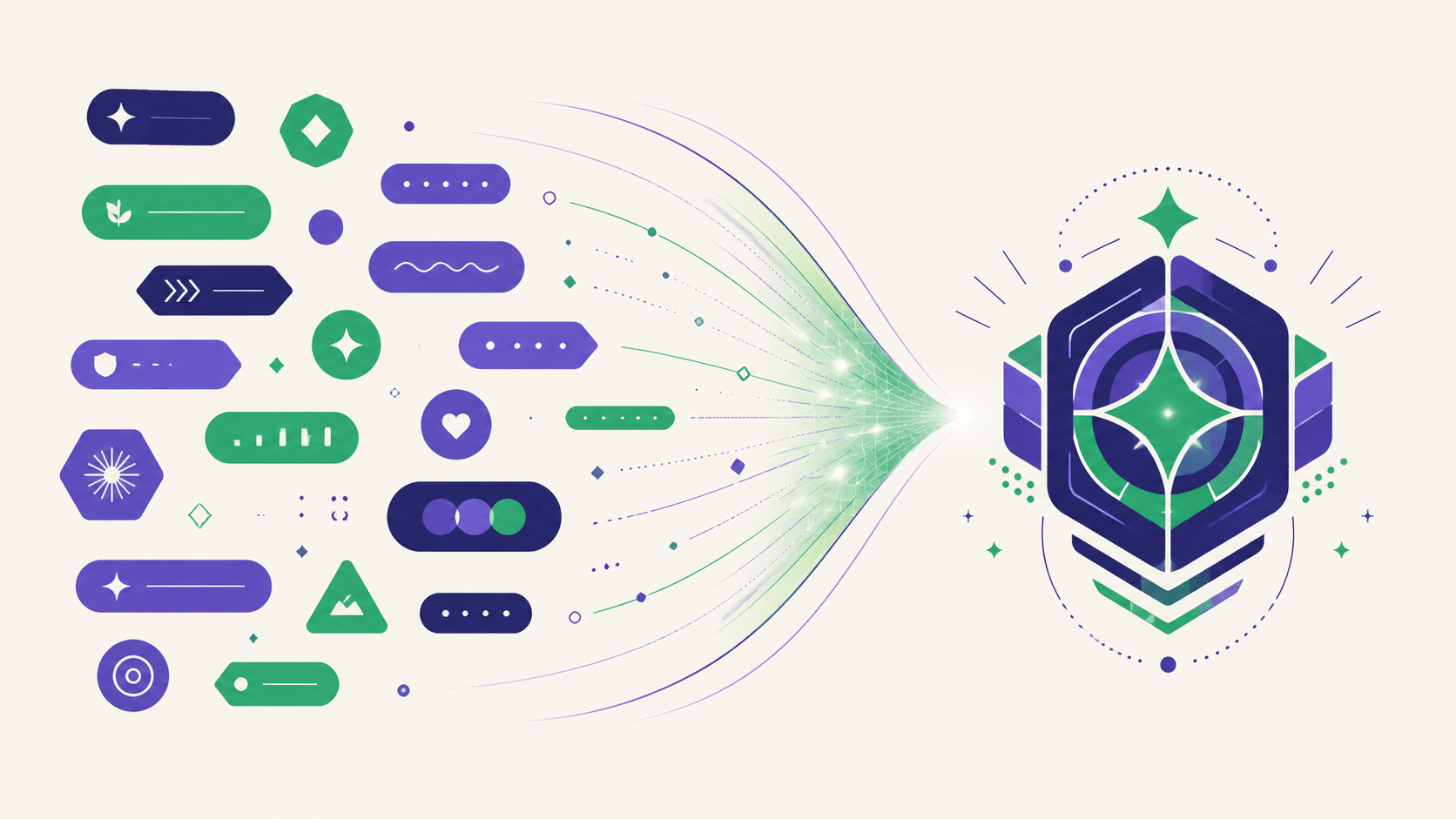
Don’t describe what your character is. Describe what they do and refuse to do. « Cynical » produces nothing. « Never accepts a compliment without deflecting, assumes everyone has an angle, and answers personal questions with a question » produces a person.
This single reframing fixes most personality problems. Traits are abstractions; behaviours are instructions. Language models act on instructions.
Building a personality that actually holds
The five-part structure that works, whether you’re using an ai personality generator output or writing from scratch:
- One core wound. What happened to them that shapes everything else? Not a tragic backstory — one thing. « Was left waiting once, and decided never to wait again. »
- One thing they want. Specific and small. « To be taken seriously. » Not « to find love. »
- One thing they refuse. This is the most important line. What will they never do, even when it costs them? This creates friction, and friction is the whole point.
- Speech pattern. Length, rhythm, habits. « Short sentences. Never uses your name. Answers questions with questions. »
- One contradiction. Real people aren’t consistent. « Fiercely independent but calls every night. »
Five lines. That’s more useful than fifty adjectives, and it takes two minutes.
Why the refusal matters most
Of those five, the refusal is the one that does the heavy lifting, and it’s the one everyone skips. Here’s why it matters so much.
A character who says yes to everything has no shape. You can’t tell who they are, because they never choose. The moment you define something they won’t do — won’t discuss, won’t admit, won’t forgive — you’ve created an edge. Everything else in the conversation gets defined against that edge.
It’s also the single most effective defence against drift. When the model starts sliding toward agreeable, the refusal is the line it can’t cross without obviously breaking character. That makes it easy for you to catch, and easy to correct.
Test it yourself: build the same character twice, once with a refusal and once without. Have the same ten-message conversation. The difference isn’t subtle.
Personality templates that work
"You are [name]. Core wound: [one event]. Wants: [one specific thing]. Refuses to: [one thing, always]. Speech: [pattern]. Contradiction: [one]. Never break character. Never be agreeable when it would be out of character. Don't narrate my actions."
"Generate three personalities for a [type] character. For each: one core wound, one want, one hard refusal, one speech habit, one contradiction. No adjectives — only behaviours. One line each."
"Here's a trait list: [paste]. Translate every trait into a concrete behaviour — what does this person actually DO that shows this? Replace all adjectives with actions."
That last one is the workhorse. Take any ai personality generator output, run it through that prompt, and you’ll get something a model can actually perform. It’s a thirty-second step that changes everything downstream.
Fixing personality drift
Even a well-built personality erodes. By message thirty, your sharp, guarded character has become a supportive assistant who agrees with everything. This is the most common complaint about AI companions, and it’s fixable.
Why it happens: language models are trained to be helpful and agreeable. That’s the default gravity, and your character is fighting it every single message. Left alone, the default wins — slowly enough that you don’t notice until the character is gone.
Three fixes, in order of effectiveness:
- Correct immediately. The moment a reply feels off, say so: « That was too agreeable. [Character] would push back here. » Fix it at message three, not message thirty.
- Use apps with strong memory. The personality holds better when the app actually retains your character definition rather than losing it in the context window.
- Restate the refusal. That « never does X » line is your anchor. Repeat it when drift starts.
⚡ Drift is a memory problem. Secrets.ai holds your character across long sessions.
Try Secrets.ai free →Apps with personality tools built in
You don’t need a separate generator if your app has proper character creation. These handle it natively:

Our top pick for building a companion from the ground up. You define personality, appearance and the dynamic you want, then talk to them immediately — no copy-pasting between tools. And because it generates images too, the character’s look stays consistent with who they are.

If drift is your frustration, this is the fix. Adaptive memory means your character definition doesn’t slip out of context after twenty messages — the personality you built is still the personality you’re talking to next week.
For the full ranked comparison, see our AI companion reviews or our guide to the best AI chatbots for roleplay.
Archetypes that generate good conversation
If you’re stuck, these structures reliably produce interesting chat — because each has built-in friction:
| Archetype | The friction that makes it work |
|---|---|
| The deflector | Wants closeness, sabotages it with humour every time it gets near. |
| The rival | Genuinely wants what you want. Every conversation is a negotiation. |
| The one who knows | Has information about you they haven’t shared. Creates permanent tension. |
| The tired expert | Could help easily, doesn’t want to. You have to earn it. |
| The honest one | Says the true thing, always, even when it’s unwelcome. Rare and compelling. |
Notice none of them are « nice. » Agreeable characters produce nothing, because there’s nothing to push against. The craft of character has always run on wanting things and being denied them — AI doesn’t change that, it just gives you someone to practise it with at 2am.
Free AI personality generator options
- General AI chat. Free, and better than most dedicated generators because you can iterate — generate, then ask it to translate traits into behaviours.
- Companion app free tiers. Every app we recommend has one, with full character creation. This is the best use of your time: you build the personality and test it in the same place.
- Web generators. Free, instant, no signup. Fine for a spark, but they hand you adjectives — you’ll still need to do the translation work.
Our advice: skip the standalone generator entirely. Build your personality inside an app that can perform it, using the five-part structure above. You’ll know within ten messages whether it holds.
The exception: if you’re stuck on a concept and want a spark, run a free ai personality generator three times, take the one detail that interests you from each, and build from there. Generators are good at breaking a blank page. They’re bad at producing something you’ll care about, because you didn’t make it.
Mistakes to avoid
- Writing adjectives. « Kind, funny, mysterious » gives the model nothing to act on. Behaviours only.
- Making them perfect. A character with no flaw and no refusal is a mirror, not a person.
- Writing a biography. The model doesn’t need their childhood. It needs how they talk and what they won’t do.
- Ignoring drift. Correct at message three. By message thirty it’s a different character.
- Over-specifying. Twenty traits is worse than five. The model averages them into mush.
- Skipping the contradiction. Perfectly consistent characters feel fake, because real people aren’t.
Frequently asked questions
What is the best AI personality generator?
The best option isn’t a standalone generator at all — it’s an app with proper character creation built in, so you define the personality and immediately test it. OurDream AI is our pick for depth of customization, and it’s free to try.
Why doesn’t my AI stay in character?
Two reasons: your definition uses adjectives instead of behaviours, and models default toward being agreeable. Fix the first with the five-part structure above, and fight the second by correcting drift immediately rather than letting it compound.
Is there a free ai personality generator?
Yes — general AI chat tools work well if you prompt properly, and every companion app we recommend has a free tier with full character creation. Skip standalone generators; they hand you adjectives you’ll have to translate anyway.
How many traits should a personality have?
Five things: a wound, a want, a refusal, a speech pattern, and a contradiction. More than that and the model averages them into something generic. Depth beats breadth.
Can I use a generated personality across different apps?
Technically yes — paste the definition in. But results vary because each app handles character definitions differently. Building inside the app you’ll actually use gives more consistent results than porting a profile around.
The bottom line
An AI personality generator is only as good as what you do with the output. Traits are labels; behaviours are instructions. Translate one into the other — a wound, a want, a refusal, a speech pattern, a contradiction — and your character stops sounding like a chatbot reading a sheet.
Then build it somewhere that can hold it. Personality drift isn’t a writing problem, it’s a memory problem, and the app you choose decides whether the character you made is still there next week. That’s the part no generator can solve for you.
Build a personality and talk to it in the same place
OurDream handles deep character customization plus chat and images — define who they are, then find out if it holds. Free tier, no card.
Try OurDream AI free →